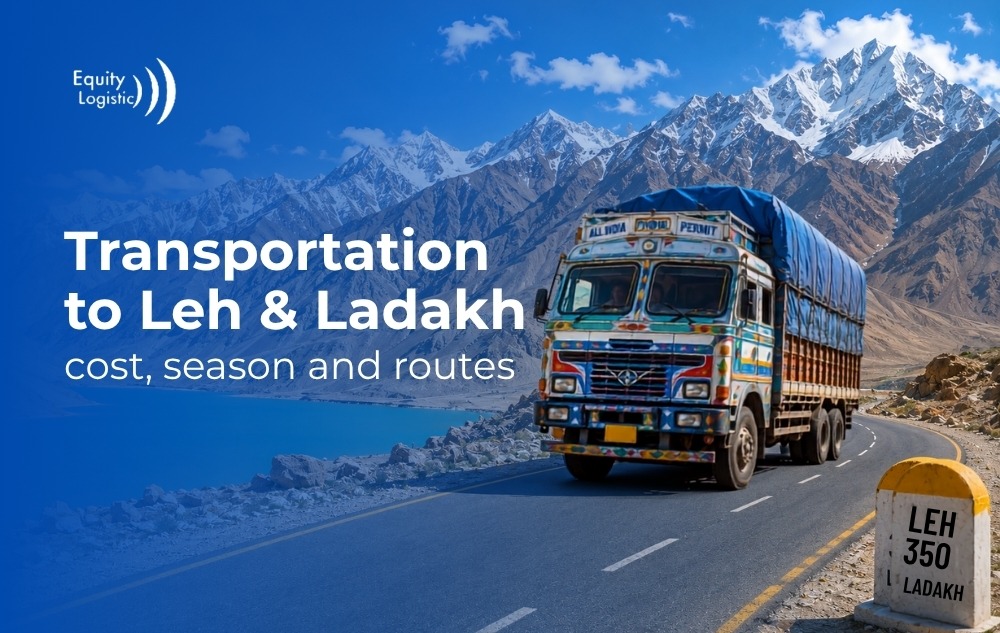
Moving heavy machinery, over-dimensional consignments or project cargo to Leh and Ladakh is unlike any other lane in India. High-altitude passes, limited road width, seasonal closures and a short working window mean that a shipment which is routine on the plains becomes a carefully sequenced operation in the Himalayas. For EPC contractors, power and renewable energy developers, telecom operators and government project teams, getting the plan right is the difference between commissioning on schedule and losing an entire construction season.
This guide breaks down the practical realities of heavy cargo transportation to Leh and Ladakh — the two primary highway routes, the season that dictates everything, and the cost drivers you should budget for before a single truck is dispatched. Figures here are illustrative and should be confirmed with our operations team against your exact cargo dimensions and dispatch dates.
Why Ladakh Is a Specialist Lane, Not a Standard Delivery
Ladakh sits at an average elevation above 3,000 metres, with mountain passes crossing 5,000 metres. The terrain constrains vehicle size, axle configuration and the daily distance a convoy can safely cover. Thin air reduces engine power and braking efficiency, gradients are severe, and long stretches have no fuel, workshop or crane support. A transporter without direct Himalayan experience will underestimate transit time, escort needs and contingency — and that is where projects slip.
- Restricted road width and tight hairpin bends limit the length and overhang of over-dimensional cargo.
- Bridge and culvert load ratings on the approach routes cap axle weights, often requiring multi-axle hydraulic trailers.
- Weather can close passes without warning, so schedules need built-in buffer days.
- Fuel, spares and recovery support must frequently be carried with the convoy rather than sourced en route.
The Season: The Single Biggest Variable
Everything about a Ladakh movement is governed by the calendar. Both primary highways cross high passes that are snowbound for much of the year, so the practical transport window is broadly late spring to early autumn. Outside that window, road access is unreliable or fully closed, and cargo either waits or moves by air at a very different cost.
The Working Window
For heavy and over-dimensional cargo, the dependable window is generally from around May to September/October, with the shoulder months carrying more weather risk. The passes typically open once snow clearance is complete and close again with the first sustained snowfall. Exact opening and closing dates shift every year with conditions, so treat any date as provisional and verify close to dispatch.
Why Early Planning Wins
Because the window is short, demand for suitable trailers, cranes and experienced crews peaks sharply. Project teams that confirm cargo readiness and book capacity early secure better rates and avoid the end-of-season crush, when a missed slot can push a delivery a full year. Aligning your procurement and dispatch schedule to the season is the most valuable planning decision you can make.
Route Options to Leh
Two road corridors carry the bulk of surface cargo into Ladakh. The right choice depends on your origin, cargo dimensions, pass conditions and the level of escort support the consignment needs.
Route 1: The Srinagar–Leh Highway (NH1)
Running via Sonamarg, Zoji La, Kargil and on to Leh, this corridor is usually the first to open each season. Zoji La is the critical high-altitude pass and the main constraint for tall or wide loads. This route is often preferred for the earliest dispatches of the season and for cargo staged from the Kashmir side.
Route 2: The Manali–Leh Highway
Crossing a series of high passes including Baralacha La and Tanglang La, the Manali corridor typically opens slightly later and suits cargo originating from or routed through northern and central India. It involves sustained high-altitude driving over long, remote stretches, so convoy self-sufficiency and crew acclimatisation matter more here.
Choosing Between Them
- Cargo height and width: pass and tunnel constraints differ between the two corridors and can decide the routing.
- Origin point: the highway that avoids unnecessary backtracking usually wins on cost and time.
- Timing: early-season dispatches often favour whichever pass has cleared first.
- Escort and permit needs: ODC and escort planning should be matched to the chosen corridor.
What Drives the Cost
There is no flat rate for Ladakh cargo. Pricing is built up from the specific consignment and the conditions of the lane. The main cost drivers are:
- Cargo weight, dimensions and whether it qualifies as ODC or special cargo, which dictates trailer type.
- Route length, gradient and the number of high passes to be crossed.
- Escort vehicles, pilot cars and any police or authority permissions required.
- Season and capacity demand at the time of dispatch.
- Contingency for weather delays, recovery support and crew acclimatisation halts.
- Permits, tolls and any state-level clearances along the corridor.
Because these variables compound, two similar-looking shipments can price very differently. We prepare a costed plan against your actual cargo sheet rather than a generic per-tonne figure. All rates and schedules quoted here are illustrative and must be verified by our operations team before you commit.
Planning a Ladakh Movement the Right Way
A successful high-altitude project move is engineered, not simply booked. As a specialist in project cargo handling and PAN-India logistics, Equity Logistics plans Ladakh consignments as a sequenced operation: cargo survey and route feasibility, trailer and escort selection, permit and pass-timing alignment, and on-ground convoy support through to delivery at site. That is how heavy machinery, transformers, telecom infrastructure and renewable-energy components reach some of the most difficult destinations in the country on schedule.
Planning a heavy or over-dimensional shipment to Leh or Ladakh this season? Talk to the Equity Logistics operations team for a route feasibility check and costed plan built around your cargo.
Frequently Asked Questions
What is the best time to transport heavy cargo to Leh and Ladakh?
The dependable window is broadly May to September or early October, when the high passes are open after snow clearance. Exact opening and closing dates change every year with weather, so confirm timing close to your dispatch date and build in buffer days.
Which route is better — Srinagar–Leh or Manali–Leh?
It depends on your cargo dimensions, origin point and pass conditions. The Srinagar–Leh highway often opens first and suits cargo from the Kashmir side, while the Manali–Leh corridor suits consignments from northern and central India. Both cross high passes, so routing should be matched to your specific load.
How is the cost of Ladakh cargo transport calculated?
There is no flat per-tonne rate. Cost is built from cargo weight and dimensions, trailer type, route and pass difficulty, escort and permit requirements, season demand and weather contingency. A costed plan is prepared against your actual cargo sheet.
Can over-dimensional cargo (ODC) be moved to Ladakh?
Yes, with careful engineering. ODC movements to Ladakh require route feasibility checks against pass, bridge and road-width constraints, the right multi-axle trailer, and escort planning. Our ODC and escort services handle exactly this kind of consignment.
What happens if a pass closes mid-transit due to weather?
This is why buffer days and contingency are built into every Ladakh plan. Convoys carry recovery and support capability, and cargo is staged at safe halts until the pass reopens. Early-season planning reduces the risk of being caught by a closure at the end of the window.
Do you handle permits and escort arrangements as well?
Yes. As a full-scope project logistics provider we manage permits, pass-timing alignment, pilot and escort vehicles, and on-ground convoy support end to end, so your project team is not coordinating multiple vendors across a difficult lane.