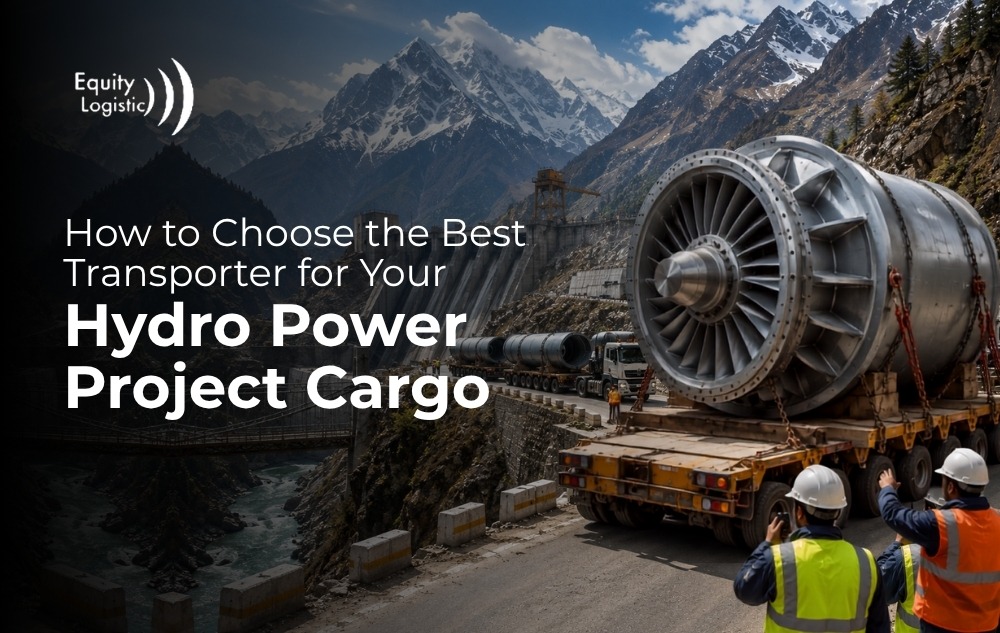
Choosing the wrong transporter for a hydro power project can cost you far more than money — it can stall an entire power scheme. Turbines, generators, transformers and penstocks are high-value, over-dimensional and usually bound for difficult terrain, so the logistics partner you pick directly affects your timeline, your budget and the safety of irreplaceable equipment. This guide sets out exactly what to look for so you can select the best transporter for your hydro power project cargo with confidence.
Why the choice is so critical
Hydro cargo is unforgiving. A single damaged generator or a convoy stranded by a missing permit can delay commissioning by months. Unlike ordinary freight, this is specialised project cargo handling where experience is the product. The right partner de-risks the whole delivery; the wrong one becomes the project’s bottleneck.
Eight criteria for choosing the right transporter
1. Proven ODC and heavy-lift expertise
Hydro components are over-dimensional by nature. Your transporter must have a genuine track record in over-dimension consignment handling — not just general trucking. Ask for comparable hydro or heavy-industrial project references.
2. Real hilly and high-altitude experience
Plains experience does not transfer to mountains. Look for a partner who has actually delivered to hill and high-altitude sites — routes like Leh and Ladakh are a strong indicator that a transporter can handle Himalayan hydro terrain.
3. The right fleet and equipment
Confirm they own or reliably control the equipment your cargo needs: hydraulic multi-axle trailers, low-beds, SPMTs and altitude-capable prime movers. A transporter dependent entirely on subcontracted equipment carries more schedule risk.
4. Route survey capability
The best transporters survey the route before quoting. If a company offers a firm price without asking about component weights, site access or bridge conditions, treat that as a warning sign — accurate hydro logistics is impossible without a survey.
5. Permit and regulatory command
Multi-state ODC permits, highway approvals and bridge clearances are complex. A capable transporter in India manages this sequencing as part of the service so your convoy never sits idle waiting on paperwork.
6. Nationwide network and end-to-end scope
Hydro cargo often travels from a port or distant factory to a remote site across several states. A partner with a strong pan-India network and the ability to manage the full pan-India logistics chain — including warehousing and staging — removes the gaps that fragmented scope creates.
7. Safety record and insurance
Ask about their safety systems, escort protocols and transit insurance. For high-value special cargo, a strong safety culture protects both the equipment and your schedule.
8. Transparent communication and single accountability
You want one accountable point of contact who reports progress honestly, flags risks early and owns the outcome from origin to site — not a chain of subcontractors passing blame.
Red flags to avoid
- A firm price quoted with no route survey or component details
- No verifiable hill or high-altitude project references
- Vague answers about permits and who arranges them
- No mention of insurance or safety protocols
- Reluctance to name the equipment they will actually use
Ten questions to ask before you sign
A short interview separates specialists from generalists fast. Put these to any transporter you are considering:
- Can you share references from comparable hydro or heavy-industrial hill projects?
- Will you carry out a physical route survey before quoting?
- What specific trailers and prime movers will you use for my components?
- Do you own this equipment or subcontract it?
- Who arranges the state-wise ODC permits, and how long will they take?
- How do you handle weak bridges and tight bends on the route?
- What is your safety record and what escort protocols do you follow?
- Is transit insurance included, and for what value?
- Who is my single point of contact from origin to site?
- How will you report progress and handle weather delays?
A specialist answers these crisply and backs them with a survey; a generalist gets vague. That contrast is the clearest buying signal you will get.
Generalist vs specialist: the practical difference
A general transport company may move your cargo cheaply on paper, but hydro project cargo punishes inexperience. Specialists price realistically because they have surveyed the route and know where the works are needed; generalists often quote low and then raise costs — or stall — when reality bites on the mountain. Specialists command permits as routine; generalists learn on your schedule. Specialists carry the fleet and the rigging expertise for on-site offloading; generalists improvise. For irreplaceable special cargo headed into the hills, the marginal saving from a generalist is rarely worth the schedule and damage risk. This is why domestic transport of hydro equipment is a specialist discipline, not a commodity service.
Why Equity Logistics fits the brief
Equity Logistics specialises in exactly this category of movement — hydro power project transportation, ODC and heavy project cargo — with hands-on experience on India’s toughest hill and high-altitude routes and a nationwide reach. From route survey and permits to specialised trailers and on-site offloading, the scope is managed end to end under single accountability. You can learn more about the company or explore the full range of logistics solutions on offer.
Conclusion
The best transporter for your hydro power project cargo is the one that combines proven ODC expertise, genuine hill-route experience, the right fleet, survey-based planning, permit command, a nationwide network and a strong safety record — all under transparent, single-point accountability. Judge candidates against these eight criteria and the choice becomes clear. When you are ready to move your turbines and penstocks safely and on schedule, contact Equity Logistics for a survey-backed proposal.
Frequently Asked Questions (FAQ)
What is the single most important quality in a hydro transporter?
Proven, relevant experience — specifically ODC handling on difficult hill terrain. Everything else follows from that track record.
Should I trust a quote given without a route survey?
No. Accurate hydro pricing requires a survey of route and site access. A firm quote without one usually means costs will change later.
Do I need one transporter for the whole journey?
It is strongly preferable. A single partner managing end-to-end project logistics avoids gaps and finger-pointing between multiple vendors.
How do I start the process?
Share your component list and site details and request a route survey. Get in touch with Equity Logistics to begin.