India’s automotive sector is one of the largest in the world, and it runs on tight schedules. A single car plant can depend on thousands of components arriving from hundreds of suppliers, in the right sequence, at the right hour. When a truck is late, a press line can stand idle. When a die or a piece of heavy plant equipment is damaged in transit, the delay can run into weeks.
For years, much of this movement was managed with phone calls, paperwork and guesswork. That is changing quickly. Digital tracking, from GPS devices to real-time dashboards and automated alerts, is reshaping how vehicles, parts and plant equipment move across the country. This article looks at what has changed, why it matters, and how logistics providers are putting these tools to use.
Why Automotive Logistics Is So Demanding
Automotive supply chains are uniquely sensitive to delay and damage, for several reasons:
- Just-in-time production. Many manufacturers keep minimal inventory on the line, so a delayed consignment can halt output.
- Complex, multi-tier networks. Parts move from tier-3 suppliers to tier-1, then to OEM plants, then to dealerships and customers.
- High-value cargo. Engines, transmissions, electronics and finished vehicles carry significant value, and so does the heavy machinery used to build them.
- Fragile or sensitive loads. Precision tooling, paint-shop equipment, battery systems and electronic modules can be damaged by shock, vibration or moisture.
- Long distances and varied terrain. India’s geography, from congested metros to remote highways, makes transit times unpredictable.
- Regulatory complexity. Permits, e-way bills, state border rules and movement restrictions affect nearly every long-haul shipment.
In this environment, simply knowing where a consignment is has become a competitive advantage.
From Blind Spots to Live Visibility
Traditionally, a manufacturer dispatched a load and then waited. Updates came when the driver called, if they called. If a truck broke down or took a wrong route, the plant learned about it only when the cargo failed to arrive.
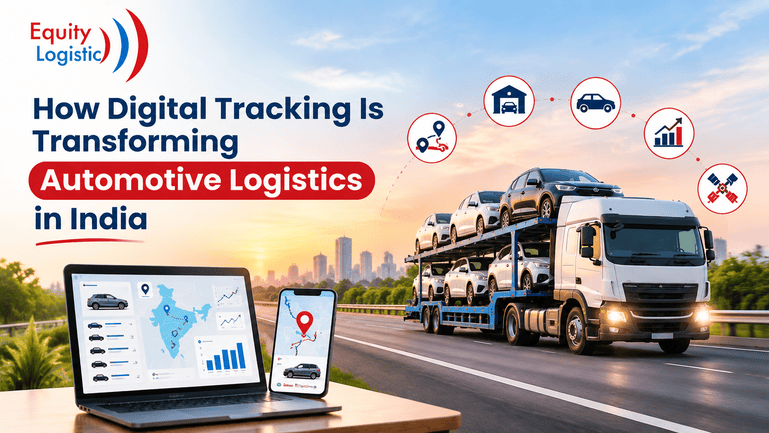
Digital tracking closes that gap. At its simplest, a GPS unit on the vehicle reports its position every few seconds. Layered on top are map displays, route history, geofences and alert systems that turn raw location data into operational insight.
The result is a shift from reactive to proactive logistics. Instead of asking “where is my truck?” after something goes wrong, planners can see a delay forming and respond before it affects production.
The Core Technologies Behind Modern Tracking
GPS and Telematics- Satellite positioning remains the foundation. Modern telematics units report not only location but also speed, stoppages, idling, route deviations and, in many systems, driver behaviour such as harsh braking or sudden acceleration.
Geofencing- A geofence is a virtual boundary drawn around a location such as a plant gate, port, warehouse or restricted zone. The system automatically alerts the relevant team when a vehicle enters or leaves it. This makes gate scheduling and unloading far more efficient, because receivers know exactly when to expect a vehicle.
IoT Sensors- Beyond location, sensors can monitor conditions inside the cargo space, such as temperature, humidity, vibration, tilt and door-open events. For sensitive automotive cargo like electronics and battery systems, this protects both the goods and the paper trail needed for any insurance claim.
Dashboards and APIs- Tracking data is only useful if the right people can see it. Cloud dashboards give plant managers, procurement teams and customers a single view of every consignment. Integrations with ERP and transport management systems allow tracking data to flow directly into planning tools.
Digital Documentation- Electronic proof of delivery, digital e-way bill management and scanned condition reports reduce paperwork, speed up invoicing and create an auditable record for every movement.
Analytics and Predictive Insight- As trip data accumulates, it becomes a planning asset. Logistics teams can analyse transit times by route, identify recurring bottlenecks, compare vehicle and driver performance, and build more reliable delivery estimates.
Key Benefits for Automotive Supply Chains
1. Fewer Production Stoppages- Real-time visibility lets planners see when a consignment is running late and reschedule production, arrange an alternative source or expedite a replacement. Early warning is often the difference between a minor adjustment and a line stoppage.
2. Better On-Time Performance- When carriers know they are being monitored and have access to live route data, schedule discipline improves. Planners can also make smarter decisions about routes, transit windows and rest stops.
3. Reduced Damage and Loss- Route-deviation alerts, unscheduled stoppage warnings and sensor data discourage theft, diversion and rough handling. For high-value loads, these controls are a meaningful layer of protection.
4. Lower Costs- Tracking exposes waste: excess idling, inefficient routes, long detention times at gates and unnecessary empty running. Reducing these directly cuts fuel and operating expenses.
5. Stronger Customer and Dealer Communication- Whether the end customer is a dealership waiting for stock or a plant waiting for tooling, accurate ETAs build trust. Fewer “where is my shipment?” calls also free up teams for more valuable work.
6. Compliance and Auditability- Digital records of movement, permits, handovers and condition reports simplify audits, insurance claims and dispute resolution.
Where Tracking Matters Most: Heavy and Over-Dimension Automotive Cargo
Much of the conversation about automotive logistics focuses on finished vehicles and components. But there is another side that depends even more heavily on careful monitoring: the heavy equipment that builds the vehicles.
New plants, line expansions and EV transition projects involve moving press machines, robotic cells, dies and moulds, paint-shop equipment, furnaces, transformers and other oversized industrial assets. These loads are:
- Extremely high in value, and often irreplaceable at short notice
- Over-dimension or over-weight, requiring route surveys, permits and escorts
- Time-critical, because installation windows are tied to commissioning milestones
- Vulnerable to damage if lashing, handling or road conditions are mismanaged
For consignments like these, tracking is a safeguard rather than a convenience. Specialists such as EquityLogistics combine engineered planning with GPS tracking and 24×7 movement visibility for heavy, high-value and project cargo moving anywhere in India. Their over-dimension consignments service covers route surveys, permits, escorts and specialised multi-axle or hydraulic trailers, with tracking running throughout the journey.
Tracking Across the Project Lifecycle
Plant-expansion and equipment-relocation programmes involve many consignments moving in a planned sequence. Tracking becomes even more valuable here because one late item can hold up the next.
A structured project handling approach coordinates multi-consignment programmes around milestones and site readiness. Live tracking lets project teams:
- Confirm that each load is on schedule relative to the installation plan
- Adjust the order of arrivals if one consignment is delayed
- Coordinate cranes, riggers and site crews around precise arrival times
- Document every handover for the project record
Where cargo cannot go straight to site, warehousing and staging provide secure storage, consolidation and phased release, so equipment arrives only when the site is ready for it. Digital inventory records and movement logs keep that process transparent.
Handling Fragile and Sensitive Automotive Cargo
Not every critical load is oversized. Precision tooling, electronic control units, sensors, test equipment and battery systems are compact but extremely sensitive. They need controlled handling, protective packing and careful monitoring.
Special cargo handling services focus on controlled movement for fragile, valuable and technically sensitive cargo. Combining this kind of handling with condition monitoring and tracking gives manufacturers the confidence that goods will arrive intact, and the evidence they need if something goes wrong.
Reaching Difficult Locations
Automotive and related industries are not limited to major industrial belts. Testing facilities, supplier sites and projects can sit in remote regions, and some cargo must cross mountain roads, ports or open water. In these conditions, tracking is critical, because normal communication and road conditions cannot be assumed.
Logistics partners with experience in difficult geographies, such as Leh and Ladakh, the Andaman and Nicobar Islands and Lakshadweep, use multi-modal planning and tracking to maintain visibility even when routes combine road and sea. Where cargo moves by water, sea transportation forms part of the plan.
For regular nationwide movement, a pan-India logistics network, backed by dependable domestic transport and pan-India heavy transport, gives manufacturers a single point of accountability from origin to destination.
What to Look for in a Tracking-Enabled Logistics Partner
If you are choosing a logistics provider for automotive cargo, consider the following:
- Real-time visibility. Ask whether tracking is continuous and whether you can access it directly or only through periodic updates.
- Proactive alerts. The provider should flag delays, deviations and stoppages before you have to ask.
- Engineering capability. For heavy or oversized cargo, tracking must be paired with route surveys, correct equipment and experienced handlers.
- Documentation. Permits, insurance, condition reports and delivery records should be standard, not optional.
- Quality systems. Look for recognised quality-management certification, such as ISO 9001:2015.
- Network reach. Your partner should be able to serve your supplier base and your hardest destinations.
- Accountability. Fewer handovers mean fewer places for a shipment to go missing. One accountable team is better than a chain of subcontractors.
- Integration. Data should flow into your existing systems and not sit in a separate silo.
The Road Ahead
Several trends will deepen the role of digital tracking in Indian automotive logistics:
- EV supply chains. Battery cells, modules and power electronics bring new handling and monitoring requirements, making sensor-based tracking more important.
- Greater automation. Predictive ETAs and automated exception handling will reduce manual follow-up.
- Tighter integration. Tracking data will connect more closely with production planning, so factories can adjust schedules automatically.
- Sustainability reporting. Route and fuel data will support emissions tracking and efficiency targets.
- Data-driven decisions. Historical trip data will inform carrier selection, route design, and inventory strategy.
Final Thoughts
Digital tracking has moved from being a nice-to-have to a core part of automotive logistics in India. It gives manufacturers visibility, planners control and customers confidence, and it turns a once-opaque transit phase into something measurable and manageable.
Whether you are moving critical components across the country or relocating heavy plant for a new production line, working with a partner that combines engineered planning, specialist equipment and reliable tracking can protect both your schedule and your cargo. To discuss your movement, visit EquityLogistics, explore their logistics solutions, or request a free quote.