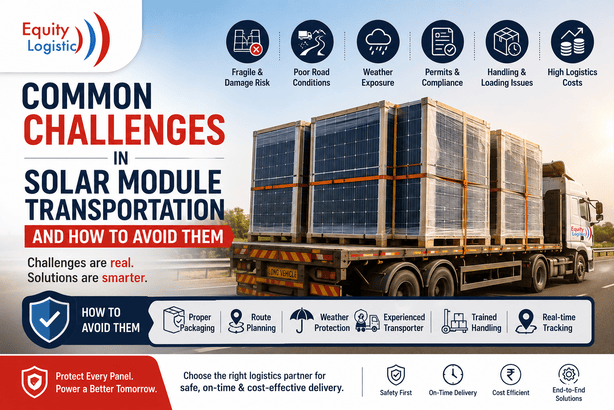
Common Challenges in Solar Module Transportation and How to Avoid Them
You've invested in your solar project. The modules are ordered, installation is scheduled, and your team is ready to begin. Then you face the real challenge: getting those valuable solar panels from supplier to site without damage.
Solar module transportation isn't like moving regular cargo. One careless movement, one rough road, one moment of improper handling can turn a ₹20,000-40,000 module into electronic waste.
The statistics are sobering:
- 2-4% damage rate across Indian transportation networks for solar equipment
- ₹50,000-2,00,000 in losses for a single damaged module
- Project delays ranging from weeks to months when replacements are needed
- Frustrated installers waiting for replacement equipment
But here's the good news: Most of these damages are preventable.
In this comprehensive guide, we'll walk through the most common challenges in solar logistics, explain exactly why they happen, and show you proven strategies to avoid them. Whether you're managing a residential installation or a utility-scale solar farm, understanding these challenges can save you thousands of rupees and months of project delays.
Challenge 1: Vibration Damage During Transit
The Problem: Invisible Damage That Destroys Efficiency
Vibration is the silent killer of solar modules. Unlike visible cracks that alert you to damage, vibration-induced microfractures can reduce panel efficiency by 20-40% without showing any surface damage.
How It Happens
During solar panel transportation, vibrations from:
- Rough road surfaces (potholes, uneven asphalt)
- Vehicle suspension movement
- Improper weight distribution
- Excessive speed on highways
- Continuous engine vibrations
These vibrations transmit through the vehicle into the solar panels' delicate internal structure. The crystalline cells, which are brittle by design, develop hairline fractures that aren't visible to the naked eye but significantly impact performance.
The Real Cost
A module that appears perfect but has vibration damage might:
- Lose 20% efficiency immediately (₹4,000-8,000 in lost output value)
- Degrade faster (10-year useful life becomes 5-6 years)
- Create "hotspots" that cause other panels to fail
- Require complete replacement under warranty (₹25,000-40,000)
How to Avoid Vibration Damage
Solution 1: Use Vibration-Dampening Transportation Equipment
The right solar panel transport company uses vehicles specifically designed to minimize vibration:
Specialized Vehicle Features
- Air suspension systems (reduce ground vibration transmission by 60-70%)
- Custom solar module racks with shock-absorbing materials
- Isolated cargo compartments (not directly mounted to frame)
- Reduced vehicle speed on poor-road sections (40-50 km/h vs. 70+ km/h)
Cost Impact
- Specialized vehicles cost 8-12% more than standard trucks
- Damage reduction savings: 30-40% fewer damaged modules
- Net savings: Usually 15-25% despite higher transportation cost
Solution 2: Strategic Route Planning
Not all routes are equal. The best solar logistics partners avoid routes with:
- Known potholes and road damage
- Unpaved or partially paved stretches
- Poorly maintained highways
- Areas with heavy congestion (stop-start driving damages modules)
Implementation
- Choose national highways over state highways where possible
- Build 10-20% extra distance buffer for better roads
- Avoid monsoon routes during rainy season
- Travel during cooler hours (early morning) to reduce vehicle vibration expansion
Real Example
- Direct route: 500 km (poor condition) vs. Optimized route: 550 km (excellent condition)
- Direct route damage: 3-4% of shipment
- Optimized route damage: 0.2-0.5% of shipment
- Savings on 50 modules: ₹1,50,000-2,00,000 in replacements
Solution 3: Proper Load Securing and Spacing
How modules are loaded affects vibration transmission:
Correct Loading Protocol
- Never stack modules directly on top of each other
- Use individual racks/shelving with 10-15 cm clearance between units
- Secure modules to prevent shifting during transit
- Distribute weight evenly across vehicle
- Use damping materials (rubber pads, foam) between modules and racks
Wrong Loading (Common Mistake)
- Modules stacked 3-4 high with minimal spacing
- No damping materials
- Uneven weight distribution
- Modules shifting during sharp turns or braking
Impact
- Incorrect loading: 8-15% damage rate
- Correct loading: <1% damage rate
- Training investment: 1-2 weeks, Savings: ₹2,00,000+ per major shipment
Challenge 2: Moisture and Humidity Ingress
The Problem: Silent Degradation That Reduces Panel Life
Moisture inside a solar module is a slow-motion disaster. Water vapor penetrates the encapsulation and causes:
- Corrosion of internal bus bars and connections (₹15,000-25,000 damage)
- Delamination of glass-encapsulant bonds (complete failure)
- Reduced insulation increasing shock risk
- Reduced efficiency (5-15% loss)
- Accelerated aging (5-year lifespan instead of 25+ years)
How It Happens
During solar module transportation:
- Open cargo holds expose modules to rain and humidity
- Temperature fluctuations cause condensation inside packaging
- Monsoon season humidity penetrates packaging
- Damaged packaging doesn't protect adequately
- Extended transit times increase moisture absorption
The Challenge: Moisture damage isn't visible until modules are installed and monitored. By then, you've already paid for "damaged" equipment that you thought was fine.
How to Avoid Moisture Damage
Solution 1: Climate-Controlled Transportation
The most effective way to prevent moisture damage is keeping solar equipment transportation in controlled environments.
Climate Control Requirements
- Temperature range: 15-35°C (prevent condensation from extremes)
- Humidity: Keep below 60% RH (relative humidity)
- Sealed cargo compartments with dehumidifiers
- Real-time humidity monitoring
Implementation Options
Premium Approach (For high-value shipments)
- Fully air-conditioned containers
- Desiccant packs in packaging
- Humidity sensors with alerts
- Cost: 15-25% premium on transportation
Standard Approach (Most cost-effective)
- Sealed cargo holds
- Desiccant cartridges in packaging
- Canvas covers that allow airflow
- Cost: 5-8% premium on transportation
Budget Approach (Minimum protection)
- Plastic covers to prevent direct rain
- Regular packaging with desiccants
- Cost: 2-3% premium
Damage Reduction Results
- Without protection: 3-5% moisture-related failure rate
- With basic protection: 0.5-1% failure rate
- With premium protection: <0.2% failure rate
- Typical savings: ₹1,00,000-3,00,000 per large shipment
Solution 2: Proper Packaging and Desiccant Management
Packaging quality directly impacts moisture protection:
Critical Packaging Elements
- Moisture-barrier film (not regular plastic)
- Adequate desiccant (silica gel) cartridges
- Ventilation holes to prevent pressure buildup
- Inner protective layers
- Shock-absorbing materials
Desiccant Management
- Change desiccants for shipments over 5 days
- Use moisture indicator cards to verify effectiveness
- Ensure desiccants don't touch module surface
- Calculate desiccant quantity based on transit duration and climate
Common Mistake: Using insufficient desiccant
- Inadequate desiccant becomes saturated in 24-48 hours
- Creates humid environment rather than protecting against it
- False sense of protection
Cost of Proper Packaging: ₹300-500 per module Savings from avoided damage: ₹15,000-25,000 per damaged module ROI: 30-80x return
Solution 3: Reducing Transit Time
Every day in transit increases moisture risk. Solar logistics optimization through:
- Direct routing (shortest distance)
- Avoiding delays (proper documentation, pre-planning)
- Consolidation to enable faster services
- Working with solar logistics providers that prioritize speed
Impact of Transit Duration
- 1-2 day transit (local): ~0.2% risk
- 3-5 day transit (regional): ~0.5% risk
- 5-7 day transit (pan-India): ~1-2% risk
- 7+ day transit (delays included): ~3-5% risk
Challenge 3: Temperature Extremes and Heat Damage
The Problem: More Than Just Discomfort
Extreme temperatures during solar panel transportation can damage:
- Inverter electronics (temperature-sensitive components fail)
- Junction box connections (solder joints weaken)
- Encapsulation materials (glass seals degrade)
- Overall performance (modules test lower than rated)
Summer Challenge (March-May) Temperatures in trucks without cooling can reach 50-65°C, causing:
- Inverter failures (rated for 45°C max)
- Connector degradation
- Accelerated aging of materials
- Performance reduction of 5-15%
Winter Consideration (November-February) While generally safer, extreme cold can:
- Cause brittle materials to crack (rare but possible)
- Create condensation on warming (if not managed properly)
How to Avoid Temperature Damage
Solution 1: Temperature-Controlled Vehicles
For solar equipment transportation, especially during summer:
Solution A: Fully Air-Conditioned
- Maintains 18-25°C regardless of outside temperature
- Best for premium equipment or sensitive inverters
- Cost: 20-30% premium
- Used for: High-value shipments, long-distance summer transit
Solution B: Ventilated with Covers
- Vehicle designed for airflow
- White/reflective covers reduce heat absorption
- Desiccant packs included
- Cost: 8-12% premium
- Used for: Most standard solar shipments
Solution C: Night Travel
- Plan summer shipments for night hours (20:00-06:00)
- Significantly reduces heat exposure
- Requires flexibility in scheduling
- Cost: Usually no premium (might even be cheaper)
- Used for: Time-flexible shipments
Solution 2: Protective Covering Systems
Even without AC, proper covers significantly reduce internal temperature:
Reflective Cover Strategy
- High-albedo (reflectivity) covers reduce internal temperature by 10-15°C
- White, silver, or metallized coverings work best
- Must be breathable (prevent condensation buildup)
- Ventilation holes allow airflow while blocking direct sun
Active Cooling Options
- Ventilation fans powered by solar panels (ironic but effective)
- Evaporative cooling systems (especially effective in dry climates)
- Ice packs for shorter journeys
- Cost: ₹5,000-15,000 per shipment
Real-World Example
- Uncovered truck: Internal temperature 58°C (outside: 45°C)
- Reflective cover: Internal temperature 42°C
- AC vehicle: Internal temperature 24°C
- Cost difference AC vs. cover: ₹3,000-5,000
- Risk reduction: 80% for cover, 95% for AC
Solution 3: Seasonal Planning
The best approach is planning around seasons:
Summer Optimization (March-May)
- Route shipments during night hours
- Use smaller, faster vehicles to reduce transit time
- Increase desiccant and cooling measures
- Plan to minimize storage in open warehouses
- Cost premium: 10-15%
Winter Strategy (November-February)
- Optimal transportation conditions
- Negotiate better rates (least demand)
- Ship larger volumes at lower premiums
- Build inventory for summer use
- Cost savings: 15-25%
Monsoon Adjustments (June-September)
- Add 2-3 days to timeline
- Invest in best moisture protection
- Use premium logistics providers
- Cost premium: 8-12%
Challenge 4: Mechanical Impact and Drop Damage
The Problem: The Point of No Return
A 2-meter drop or heavy impact is often fatal for solar modules. Unlike many products that can tolerate some physical abuse, solar panels are designed for static loads only.
How Impact Damage Occurs
During solar module transportation:
- Loading/unloading accidents (modules dropped during transfer)
- Sudden braking (modules shift and impact vehicle sides)
- Sharp turns (unsecured modules slide and crash)
- Vehicle collisions (rare but catastrophic)
- Forklift or handling equipment accidents
- Falling objects from above
Damage Assessment
- Minor cracks: 10-20% efficiency loss (₹2,000-4,000 damage)
- Major cracks: 40-60% efficiency loss (₹8,000-15,000 damage)
- Shattered glass: Total failure, module unusable (₹20,000-40,000 loss)
How to Avoid Impact Damage
Solution 1: Specialized Loading and Unloading Procedures
Critical Protocol
- Use trained personnel only (not general laborers)
- Use mechanical lifts and equipment (never hand-carry modules)
- Secure lifting points (every module has designated points)
- Controlled speed during transfer
- Clear communication between team members
- Never drop modules from height
Training Program
- Half-day training session
- Certification for personnel
- Regular refreshers (quarterly)
- Cost: ₹500-1,000 per person
- Prevents: 70-80% of handling accidents
Equipment Investment
- Proper module racks for loading
- Mechanical handling equipment
- Protective edge padding on racks
- Cost: ₹50,000-1,00,000 one-time
- Saves: ₹2,00,000+ per prevented accident
Solution 2: Proper Securing and Padding
Once loaded, modules must be secured to prevent shifting:
Securing Method
- Each module individually secured (not just stacks)
- Use padding/cushioning materials between modules
- Secure racks to vehicle floor
- Use ratchet straps (not just placement)
- Leave no room for movement
Testing the Setup
- Simulate hard braking (simulate impact)
- Simulate sharp turns
- Verify no movement occurs
- Check securing systems before departure
Cost: ₹200-500 per shipment Damage reduction: 90%+ for impacts ROI: Immediate and substantial
Solution 3: Insurance and Documentation
While prevention is best, proper insurance provides backup:
Insurance Coverage Requirements
- Full replacement value coverage
- "All-risk" cargo policy (not just standard liability)
- Specific coverage for solar modules
- Deductible: Keep under ₹10,000 per incident
- Verification of coverage before transit
Documentation
- Pre-transit condition photos
- Detailed inventory (module serial numbers)
- Signed handover documentation
- Post-delivery inspection protocol
- Quick claim process (48-72 hour turnaround)
Cost of Insurance: 0.5-1% of shipment value Peace of mind: Significant Claim recovery rate: 80-95% with proper documentation
Challenge 5: Inadequate Handling Expertise
The Problem: Generic Transporters Treating Solar Like Regular Cargo
This is perhaps the most critical challenge. A solar panel transport company lacking experience doesn't understand the unique fragility of modules.
What Wrong Expertise Looks Like
Generic solar equipment transportation provider:
- Treats modules like "boxes to move"
- Uses standard loading procedures
- No specialized equipment or training
- Views complaints as inconveniences
- No understanding of damage mechanisms
- Lowest cost mentality
Result: 3-5% damage rate vs. 0.2-0.5% for specialists
How to Avoid This Challenge
Solution 1: Choose a Specialized Solar Logistics Partner
Selection Criteria
Experience Verification
- Minimum 3+ years in solar transportation
- 100+ solar projects completed
- References from at least 5 customers
- Track record of damage rates <1%
- Industry certifications relevant to solar
Capability Assessment
- Dedicated fleet for solar (not shared with other cargo)
- Specialized handling training for entire team
- Documented loading procedures
- Quality control systems
- Real-time tracking capabilities
Questions to Ask
- "How many solar module shipments do you handle monthly?"
- "What's your damage rate for solar equipment?"
- "Do you have documented loading procedures specific to solar panels?"
- "Can you provide references from 5 solar companies?"
- "What's your recourse if modules arrive damaged?"
Cost Impact: 5-15% premium over generic transporters, but 30-40% lower total cost including damages.
Solution 2: Partnership and Protocol Development
Once you've selected a solar logistics partner, establish clear protocols:
Documented Procedures
- Written loading/unloading procedures
- Specific handling equipment requirements
- Route planning methodology
- Climate control specifications
- Damage assessment protocol
- Communication and update schedules
Training and Certification
- Initial training for entire transportation team
- Quarterly refresher training
- Certification for supervisors
- Documented competency verification
- Continuous improvement program
Performance Monitoring
- Monthly damage rate tracking
- On-time delivery verification
- Customer satisfaction surveys
- Cost per shipment analysis
- Quarterly performance reviews
Cost: 2-5 hours per month management time Value: Ensures consistent quality and identifies issues early
Solution 3: Leverage Technology and Monitoring
Modern solar module transportation solutions include:
Real-Time Monitoring
- GPS tracking (know exact location)
- Temperature monitoring (verify climate control)
- Vibration sensors (ensure proper vehicle operation)
- Humidity sensors (confirm moisture protection)
- Photographic evidence (condition verification)
System Integration
- Automated alerts for deviations
- Pre-delivery notifications
- Proof of delivery documentation
- Claims management through platform
- Performance analytics
Cost: ₹500-1,000 per shipment Value: Prevents disputes, improves accountability, enables optimization
Challenge 6: Documentation and Compliance Issues
The Problem: Interstate Complications and GST Challenges
Solar module transportation in India involves interstate movement, creating documentation requirements that many standard transporters don't understand.
Common Issues
- Incorrect GST compliance documentation
- Missing transportation permits for certain routes
- Incomplete insurance documentation
- Delayed state-to-state movement approvals
- Inconsistent paperwork leading to delays
Impact of Non-Compliance
- Detention at toll plazas or checkpoints (adds 1-2 days)
- Fines and penalties (₹5,000-20,000)
- Withheld shipments until resolved (blocks projects)
- Insurance claim denials due to improper documentation
How to Avoid Documentation Challenges
Solution 1: Partner with Compliance-Experienced Providers
Required Verifications
- Current GST registration (confirm validity)
- State transport permits (for all states on route)
- Insurance certification (reviewed and current)
- IMT-17 forms (vehicle fitness certificate)
- Appropriate license category for cargo type
Documentation Preparedness
- Pre-document all requirements before transit
- Carry digital and physical copies
- Keep backup documentation in vehicle
- Have designated contact for compliance issues
- 24/7 support for unexpected issues
Solution 2: Pre-Transit Documentation Checklist
Before any solar logistics shipment, verify:
Shipper Documents
- Invoice/proforma invoice
- Packing list with detailed inventory
- Insurance certificate
- Export/import documentation (if applicable)
Transporter Documents
- GST registration certificate
- Transportation license
- Vehicle registration and fitness
- Permit for intended route
- Insurance coverage verification
Compliance Documents
- Form GST INV-2 (if registered)
- State check-post approvals
- Any special movement permits
- Hazmat documentation (if applicable)
Receiving Documents
- Delivery instructions
- Receiving contact information
- Proof of delivery template
- Dispute resolution contact
Solution 3: Digital Documentation Systems
Modern solar panel transportation uses digital systems:
Benefits
- All documents accessible to all parties
- Real-time status updates
- Automatic alerts for missing documentation
- Reduced delays at checkpoints
- Faster claim processing
Implementation
- Cloud-based document management
- Mobile access for drivers
- Automated verification systems
- Integration with government portals
- Audit trail for compliance
Challenge 7: Cost Management Without Compromising Safety
The Problem: The Temptation to Cut Corners
When transportation costs are high, the pressure to reduce costs increases. This often leads to compromises:
- Skipping climate control to save cost
- Using inexperienced handlers to reduce labor cost
- Consolidating shipments with incompatible cargo
- Extending delivery times to reduce vehicle cost
The Trap: These "savings" typically cost 5-10x more in damages.
How to Achieve Cost-Effective Safe Transportation
Solution 1: Consolidation Without Compromise
Safe consolidation:
- Combine only solar modules with compatible cargo
- Never mix solar panels with heavy items, liquids, or hazardous materials
- Ensure consolidated load respects weight limits
- Verify all partners follow same safety protocols
Cost Benefit
- Consolidation reduces per-unit cost by 30-40%
- Proper consolidation doesn't increase damage risk
- Achieve cost efficiency without safety compromise
Solution 2: Service Level Optimization
Strategic Service Selection
- Use standard service (4-7 days) for regular shipments
- Reserve express service for urgent needs
- Plan ahead to use economy service where time-permitting
- Avoid last-minute rushed transportation
Cost Impact
- Standard vs. Express: 40-50% cost difference
- Proper planning shifts 30% of volume to more efficient service levels
- Annual savings: ₹50,000-2,00,000 without service reduction
Solution 3: Volume Commitments for Better Pricing
Rather than cutting quality, commit volume for better rates:
Approach
- Annual commitment to 100+ shipments (or relevant threshold)
- Predictable volume enables better planning
- Transporter can optimize fleet and staff
- Pass cost savings to committed customer
Negotiation Points
- Base rate reduction: 10-15%
- Volume threshold bonus: Additional 2-5% at targets
- Service improvement incentives: Rate reduction for exceeding targets
- Long-term partnership discount: Additional 3-5% for 2+ year commitment
Result: 15-25% cost reduction with improved service quality
Implementation Guide: Avoiding All Challenges
Step 1: Audit Current Transportation (Week 1)
- Review last 12 months of solar module shipments
- Document any damage incidents with costs
- Analyze current transporter capabilities
- Calculate total transportation cost (including hidden damages)
Step 2: Select Specialized Solar Logistics Partner (Week 2-3)
- Research solar module transportation specialists
- Request proposals and references
- Verify credentials and experience
- Negotiate terms and pricing
Step 3: Establish Protocols and Training (Week 4)
- Document loading/unloading procedures
- Arrange personnel training
- Establish communication protocols
- Set up monitoring and documentation systems
Step 4: Monitor and Optimize (Ongoing)
- Track damage rates monthly
- Review performance quarterly
- Make adjustments based on data
- Continuously improve through feedback
Conclusion: Prevention Is Always Better Than Replacement
Solar module transportation challenges are real, but they're almost entirely preventable with the right approach and partner.
The choice between:
- Generic transporter: Lower quoted rate, 3-4% damage, project delays, frustration
- Specialized partner: Slightly higher rate, <1% damage, on-time delivery, professional management
Is actually a choice between an expensive false economy and smart investment.
Ready to Eliminate Solar Transportation Challenges?
Equity Logistics specializes in solar panel transportation with:
- 100+ successful solar projects
- <0.8% damage rate (industry best)
- Specialized equipment and trained personnel
- Climate-controlled vehicles
- Real-time tracking and monitoring
- Complete documentation management
- 98%+ on-time delivery
Visit https://www.equitylogistic.com/solar-module-transportation to learn how we can handle your solar logistics needs safely and cost-effectively.
Don't let transportation challenges derail your solar project. Partner with specialists.
FAQ
Q: What's the most common cause of solar module damage during transportation?
A: Vibration-induced microfractures, followed by moisture ingress and impact damage. Most are preventable with proper transportation methods.
Q: How much more expensive is specialized solar transportation?
A: Typically 8-15% premium over generic transporters, but 25-35% cheaper total cost when you include damage prevention.
Q: Can I use my current transporter if I train them on solar handling?
A: Possible, but specialized transporters have systems, equipment, and expertise built around solar. Training alone rarely achieves their performance level.
Q: What should I look for in a solar panel transport company?
A: Experience with 100+ solar projects, <1% damage rate, specialized equipment, documented procedures, real-time tracking, and strong references.
Q: How do I know if my modules were damaged during transportation?
A: Visual inspection for cracks (obvious), but vibration damage requires electrical testing. Request delivery inspection with qualified personnel.
Q: What happens if modules arrive damaged?
A: With proper insurance and documentation, file claim with the transporter. Recovery typically takes 2-4 weeks. Choose a transporter with a good claim history.
Q: Is temperature control really necessary for solar panels?
A: Especially in summer (March-May), yes. Temperature control prevents inverter failure and material degradation, protecting investment.
Q: How long is too long for solar module transportation?
A: Ideally 1-5 days. Longer transits increase moisture and damage risk. Pan-India shipments should use 5-7 days maximum.